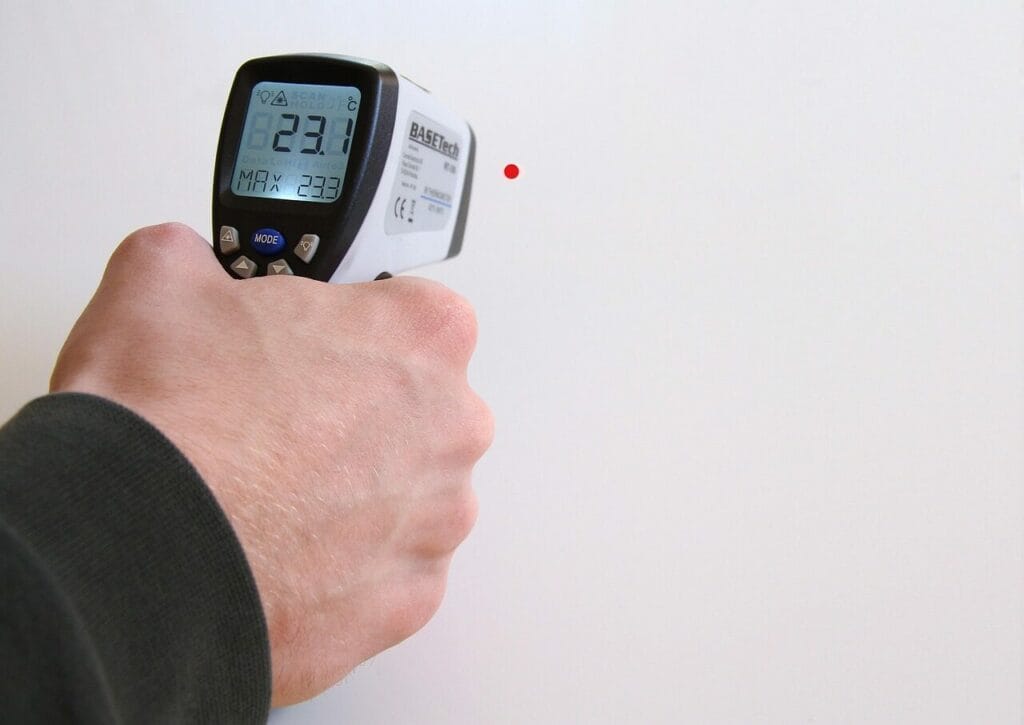
A team at the Institut national de la recherche scientifique (INRS) has developed a groundbreaking thermal camera that could revolutionize fever screening in public places. Traditional thermal cameras face accuracy issues due to makeup, masks, and other factors affecting skin temperature measurements. However, this new camera, named SPIRIT (Single Pixel Infrared Imaging Thermometry), focuses on the inner canthus—the corner of the eye near the nose—for more precise and reliable temperature readings.
Professor Jinyang Liang, leading the research, explained that traditional cameras measure skin temperature, which can be influenced by external factors. In contrast, the inner canthus provides a more accurate reflection of core body temperature, essential for assessing an individual’s health status. SPIRIT’s innovative design uses a single infrared pixel and advanced computational imaging technology to capture temperature data efficiently and accurately.
SPIRIT’s capabilities enable rapid and detailed mapping of inner canthus temperature variations, offering improved measurement efficiency and enhanced accuracy. The camera can detect subtle temperature differences related to daily activities, gender, and even the onset of fever, providing valuable insights for public health applications like COVID-19 fever screening.
While the SPIRIT camera shows promise in healthcare settings and public spaces, there are challenges to address before widespread deployment. The need for subjects to remain still for 15 seconds during scanning poses practical limitations in busy environments like airports. However, once optimized, the technology could be integrated seamlessly into existing screening processes, potentially reducing false alarms and unnecessary testing.
Beyond fever screening, researchers envision diverse applications for SPIRIT, including detecting disease-related thermal signatures and enhancing visibility in challenging conditions. The camera’s precision and versatility open up possibilities for various sectors, from healthcare to astronomy and material science, promising advancements in diagnostics and monitoring.