
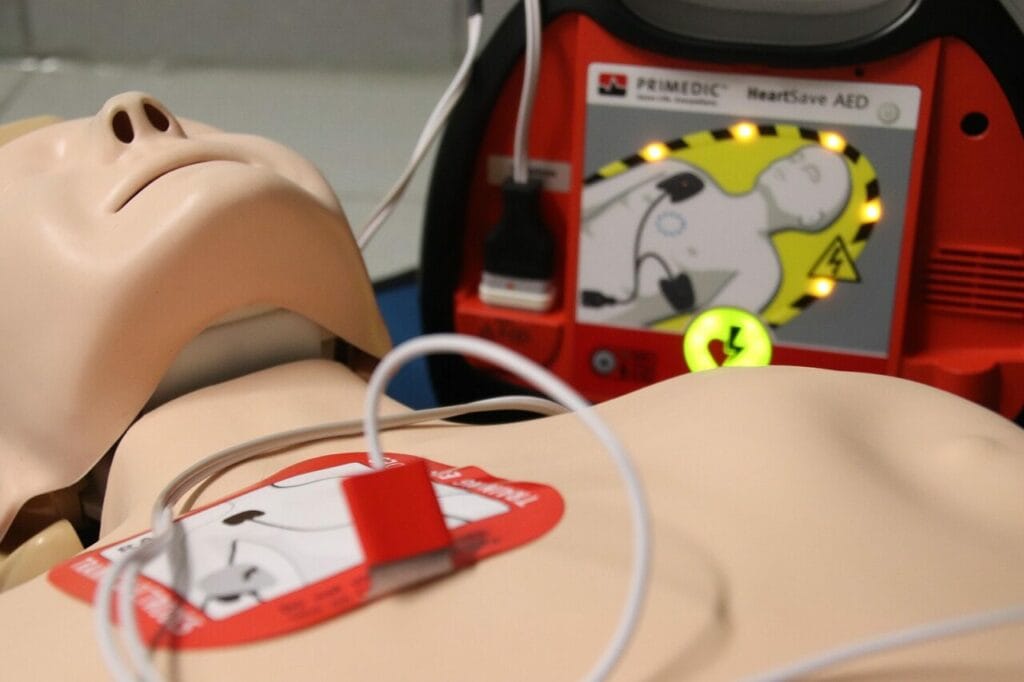
Automated External Defibrillators (AEDs) are life-saving devices found in public locations like schools, malls, and subway stations. When combined with CPR during a cardiac arrest, AEDs can significantly increase a person’s chance of survival.
Roberta Scott, from AED Foundation Ontario, emphasizes the importance of quick action in such emergencies. A simple process of calling 911, starting CPR, and using the AED can potentially save a life.
However, a concerning trend is the lack of AEDs in high-rise buildings in Toronto. Research shows that survival rates drop significantly on higher floors, highlighting the urgent need for accessibility to these devices.
Dr. Lesley James, of the Heart and Stroke Foundation of Ontario, points out the challenges paramedics face in reaching patients on higher floors due to long travel times and delays. This issue has prompted Toronto’s Planning and Housing Committee to consider making AEDs mandatory in high-rises.
Dr. James stresses the importance of AED accessibility and awareness among residents of tall buildings. Current regulations in Ontario require AEDs at construction sites, and efforts are underway to create a registry for easier location identification.