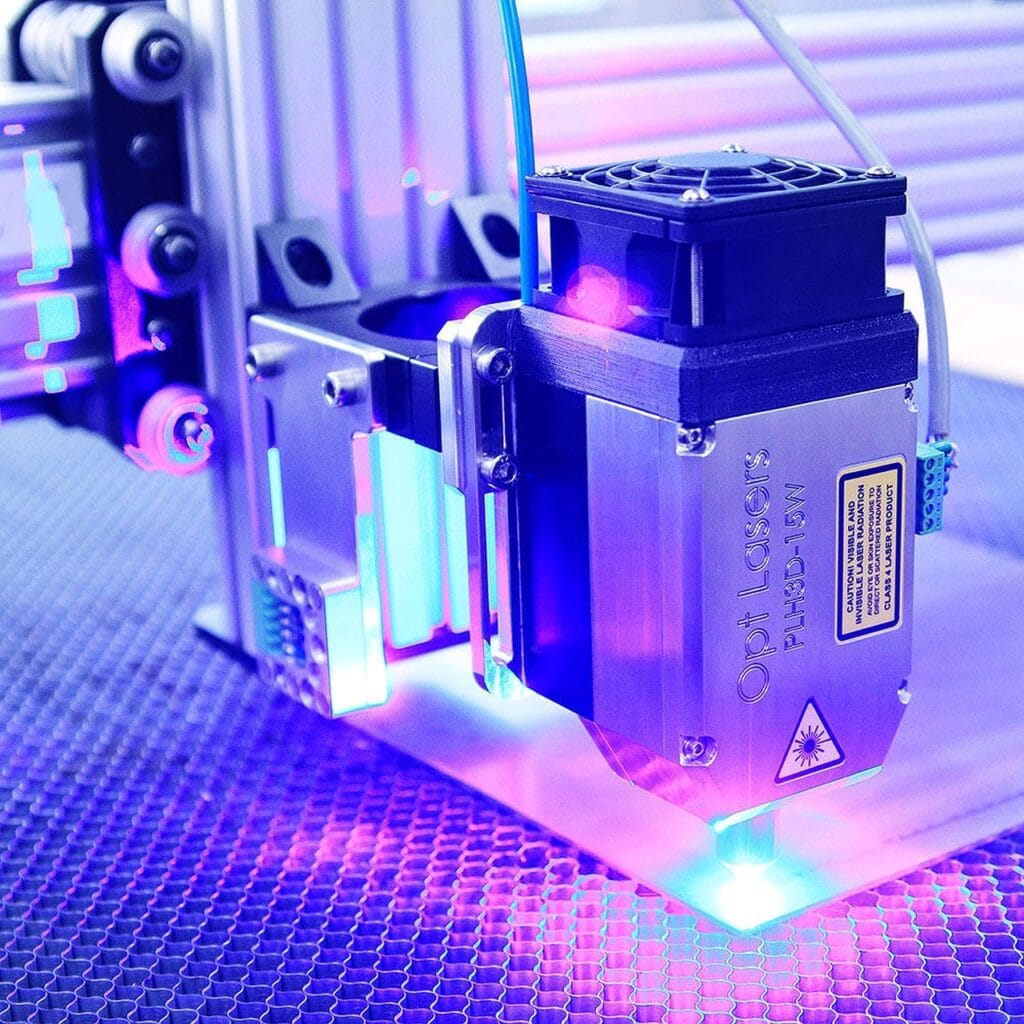
Researchers in Quebec have made history by achieving the highest neutron flux ever recorded using a laser, a groundbreaking accomplishment with wide-ranging implications across various industries.
At the forefront of this achievement are scientists from the Institut national de la recherche scientifique (INRS) and Infinite Potential Laboratories (IPL), who utilized the Advanced Laser Light Source (ALLS) femtosecond source laboratory. This cutting-edge facility, housed at INRS’s Centre Énergie Matériaux Télécommunications, boasts Canada’s most powerful laser.
Sylvain Fourmaux, a research associate at INRS’s Centre Énergie Matériaux Télécommunications, highlighted the unique capabilities of the Canadian laser, stating, “We leveraged a method employed by other research groups, but the key difference lies in the exceptional energy, power, and repetition rate of our laser setup.”
The breakthrough, achieved after two decades of dedicated effort, represents a significant advancement in technology.
The innovative approach involves accelerating electrons within a laser-generated plasma and directing them toward a tungsten target, resulting in the production of gamma rays that trigger a photo-nuclear reaction, yielding a remarkable volume of neutrons.
This groundbreaking technique produces neutron flux levels nearly 100 times higher than conventional laser methods, a milestone described as “unprecedented.”
The practical implications of this milestone are substantial and easily comprehensible.
Professor François Légaré, director of the INRS Center for Energy, Materials, and Telecommunications, emphasized the applications of neutron absorption, such as generating highly detailed X-rays and optimizing electric vehicle batteries through improved imaging techniques.
Previously, obtaining sufficient neutrons necessitated access to nuclear reactors or particle accelerators. However, the work of researchers at INRS and IPL is now paving the way for widespread neutron access through compact laser systems, thereby democratizing the process.
This cutting-edge technology not only facilitates neutron production but also generates substantial quantities of gamma rays, enabling multimodal imaging capabilities.
The implications of this innovation span a wide range of applications, including rapid prototyping, weld inspections, concrete assessment, explosive device testing, quality assurance, radiation resistance evaluations, and nuclear fuel inspections.
Moreover, advancements in machine learning are poised to automate complex laser-plasma operations, enhancing operational efficiency.
The authors of the study, published in Nature Communications, foresee a future where compact and affordable neutron sources drive innovation across various sectors, with readily available laser systems and expert companies capable of designing integrated solutions.