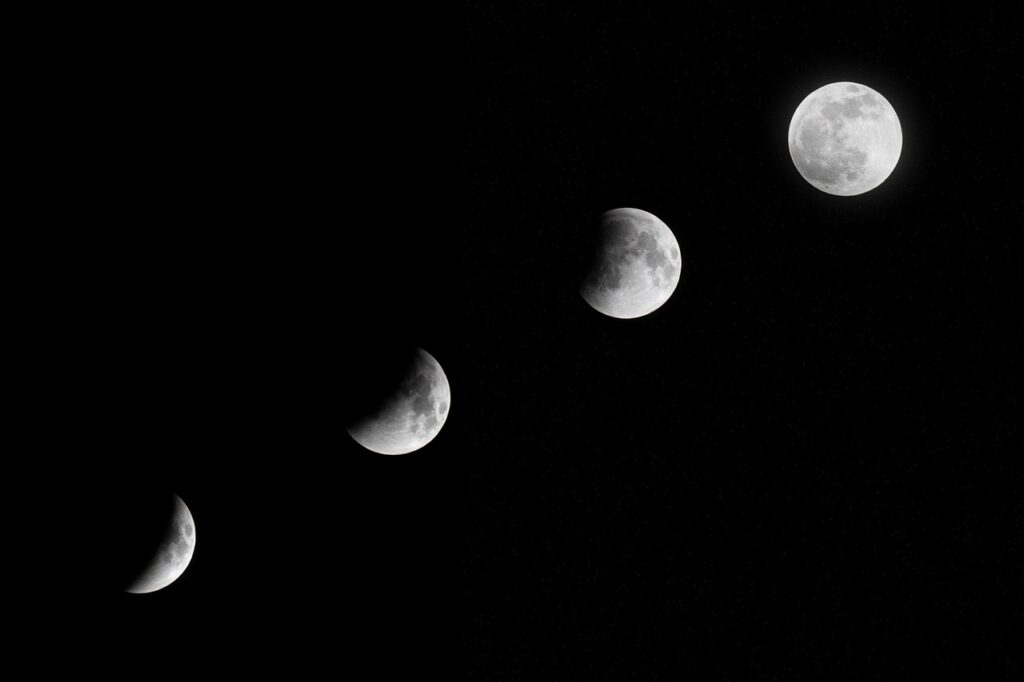
A reddish Moon, or “Blood Moon,” will appear early in the Canadian sky on Tuesday, March 3, as a total lunar eclipse unfolds.
A total lunar eclipse occurs when the full moon passes completely into the Earth’s shadow, explains Philippe Moussette, amateur astronomer and president of the Véga de Cap-Rouge astronomy club. The Earth is between the Sun and the Moon when this phenomenon occurs.
“This means that the only light that will be sent to the moon is the light that is filtered through the atmosphere. That’s why the moon will turn reddish,” says Moussette, hence its nickname “Blood Moon.”
Related:
Unlike a solar eclipse, it is possible to watch a lunar eclipse with the naked eye or with binoculars, Moussette points out. But those who want to see this eclipse will have to get up early.
According to the Canadian Space Agency, the approximate time of totality is 7:04 a.m. Atlantic Time, 6:04 a.m. Eastern Time, and 3:04 a.m. Pacific Time.
“For people in Quebec, the further west you are, the better,” said Moussette.
“For people in Quebec City, for example, the total eclipse will begin at 6:03 a.m., but the moon will set at 6:17 a.m. So, obviously, we won’t have much time to see it, and we’ll see an area that is almost in broad daylight,” he explains. Moussette said that while the “blood moon” will be visible across Canada, people in the western part of the country will have the best view.
The Canadian Space Agency states on its website that there are an average of two lunar eclipses per year, but that there can be up to five in a given year. A total lunar eclipse occurs in 37.3 per cent of cases, according to the organization.
–This report by La Presse Canadienne was translated by CityNews