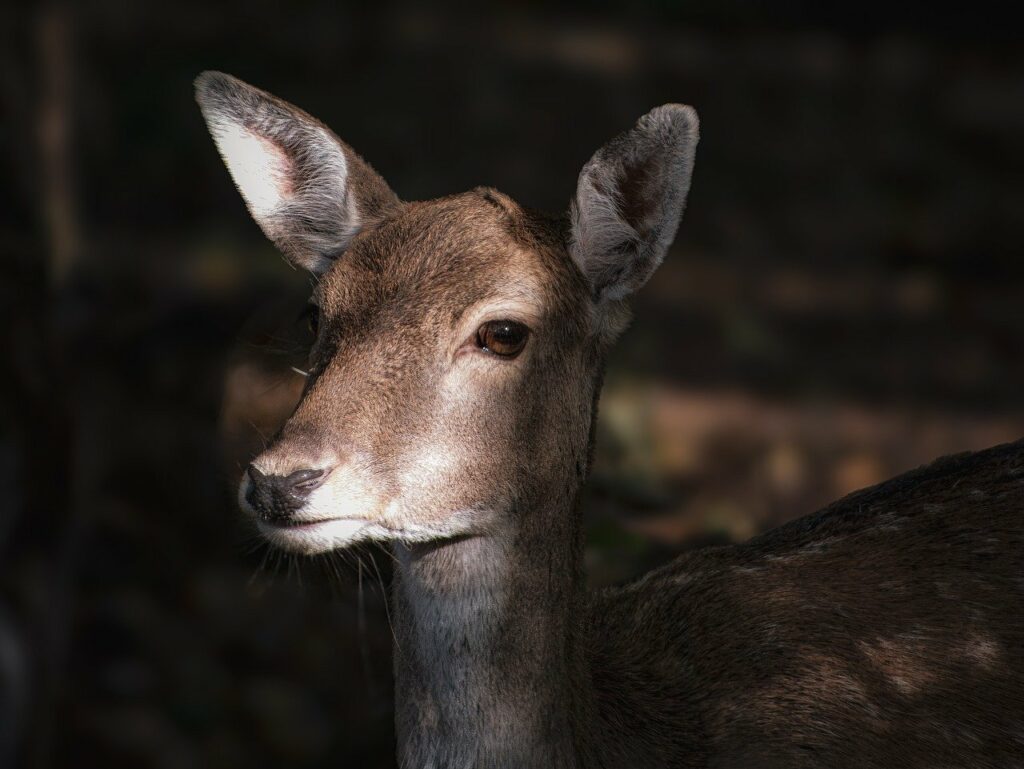
Caribou are the only deer species in which females also have antlers, and experts have long assumed that these antlers are used to defend their food by repelling males when they no longer have their antlers.
However, a new study offers a surprising alternative explanation: female antlers also appear to be a source of crucial minerals for the animals, which gnaw on them.
Researchers at the University of Cincinnati have discovered that caribou, particularly females, gnaw on antlers that have fallen over the years to add crucial minerals to their diet.
Related:
Males shed their antlers in the fall, after the rut, but females shed theirs in the spring, shortly before calving. Large quantities of female caribou antlers are therefore found in calving areas and, according to the researchers’ work, it is mainly females with newborns that gnaw on them.
The research by Joshua Miller and Madison Gaetano, published in the journal Ecology and Evolution, was conducted with the help of colleagues from the University of Alaska in the Arctic National Wildlife Refuge, home to the Porcupine caribou herd, renowned for its annual migration of nearly 2,500 kilometres.
In the cold, dry climate of the Arctic tundra, antlers shed during molting can remain on the ground for decades or even centuries, providing a useful and easily accessible source of minerals such as calcium and phosphorus at a crucial time after calving. A male’s antlers can extend beyond a metre and weigh nearly 10 kilograms, while those of females are much smaller.
Researchers collected antlers and bones during expeditions to the Arctic refuge from 2010 to 2018. It quickly became apparent that the antlers had been gnawed, but it was not clear by which animal. In the laboratory, examinations of tooth marks revealed that while wolves and bears leave distinctive marks on bones, caribou are indeed the ones chewing on the antlers. According to their analyses, 86 per cent of the 1,567 antlers examined had been gnawed on, and 99 per cent of those had been gnawed on by caribou.
In contrast, the 224 bones from caribou, moose, and muskox skeletons collected showed mainly traces of wolf and bear teeth. Traces of caribou teeth were found on only 12 per cent of the bones, and rodent teeth on only one per cent.
Biologists have always viewed female antlers as a defensive tool, but their role as a source of minerals once they fall off adds an unknown benefit. This also explains the timing of the females’ molting, which occurs in the days leading up to calving, indicating that they carry this nutritional supplement that becomes available just when they need it most. Since they can remain on the ground for centuries without deteriorating, these antlers represent a constantly available source of minerals in calving areas.
Mathieu Leblond, an animal ecology researcher and caribou specialist at Environment Canada, knew that these deer tend to chew on antlers, “but I thought it was very anecdotal, perhaps even rare. It’s something we observe occasionally, but what these researchers are showing is that almost all of the antlers that were seen with teeth marks were almost always caribou teeth.”
“This study sheds new and additional light on the subject,” adds his colleague Mathieu-Hugues St-Laurent, professor of animal ecology at the Université du Québec à Rimouski and also a caribou specialist. “It doesn’t necessarily overturn our understanding of why female caribou have antlers. There may be multiple causes, but there is certainly something very interesting about the fact that females living in very poor habitats, such as caribou, recover important nutrients at the end of gestation.”
As for the already known use of female antlers, St-Laurent describes it as follows: ” Males shed their antlers in the fall, after the rut, explains St-Laurent. When they have finished breeding, they are exhausted, worn out. They have defended access to the harem and need to feed. In fact, there is a high mortality rate among males after breeding. And when winter comes, they dig under the snow to access vegetation. “The female will simply wait, and when the male reaches the vegetation, she will descend into the feeding crater and, with her short but very sharp and sturdy antlers, she will, in plain English, peck the male in the ribs, drive him out of the hole, and feed there. The male, on the other hand, can hardly stand up to her. Yes, he is bigger, but he no longer has his plumage.”
The term crater is not an exaggeration, he explains, as caribou dig up to 1.3 metres deep under the snow to find food. “These animals have hooves that allow them to walk on snow. They are much wider than those of moose or deer. They use them to dig. That’s how the species got its name; in the indigenous language, caribou means ‘one who digs in the snow.’”
Leblond sees logic in this discovery. “Phosphorus and calcium are extremely rare in this environment in their natural form. Building antlers is costly in terms of calcium and phosphorus. For them, nibbling on these antlers is really a way of obtaining a small amount of these resources for other processes that are extremely costly for caribou, such as reproduction, calving, and nursing.”
Moulting also represents a natural environmental engineering mechanism, since over the centuries, the antlers eventually decompose, returning these crucial minerals to the soil to nourish the grasses, mosses, lichens, tannins, and other plants that feed the caribou.
If the female’s antlers serve to protect her food from males and provide her with additional minerals and calcium, what purpose do the males’ antlers serve? “Male caribou have very, very large antlers,” explains Leblond. “They are the largest antlers among deer, very impressive and very heavy. They use them during the rut to fight other males and impress females. It’s really related to reproduction because they lose them in the fall, once the rut is over.”
–This report by La Presse Canadienne was translated by CityNews