“I’m Canadian space astronaut Jeremy Hanser. After years of preparation, we’re finally here.” That’s Canadian astronaut Jeremy Hansen, who made history on Monday.
CityNews was at the Canadian Space Agency in St-Hubert on Montreal’s South Shore – at a viewing event here as Artemis II made a six-hour flyby of the moon.
It’s something that hasn’t been done since the Apollo era, and Hansen and three Americans are on board. The astronauts became the farthest humans from Earth during the lunar flyby.
“This is decades and decades of technological contributions to missions, of scientific contributions to missions, and so to have the first non-American of any country fly out to the moon is really historic for Canada,” said Tim Haltigin, a senior scientist with the Canadian Space Agency.
“So to have four experts up there taking a look with their own eyes and telling us what they see really is setting the stage to collect important data, not only for this mission, but to prepare for future robotic and human exploration as well.”
Related:
A live look from space showing the Orion Integrity spacecraft, the moon, and Earth was broadcast back to Earth. Despite being thousands of kilometres apart, everyone was in one picture.
The crew took turns observing and photographing geological features on the Moon, including impact craters and ancient lava flows.
“They’ll be able to see that in one look at the moon and the human eye really can see subtle nuances and colors. It can see in three dimension as well, which is very hard to reconstruct from data that are collected from Orbiter,” said Caroline-Emmanuelle Morisset, a senior scientist with Lunar and Planetary Science.
Currently aboard Orion, four crew members are Reed Wiseman, Victor Glover, Christina Cook, and Jeremy Hansen.
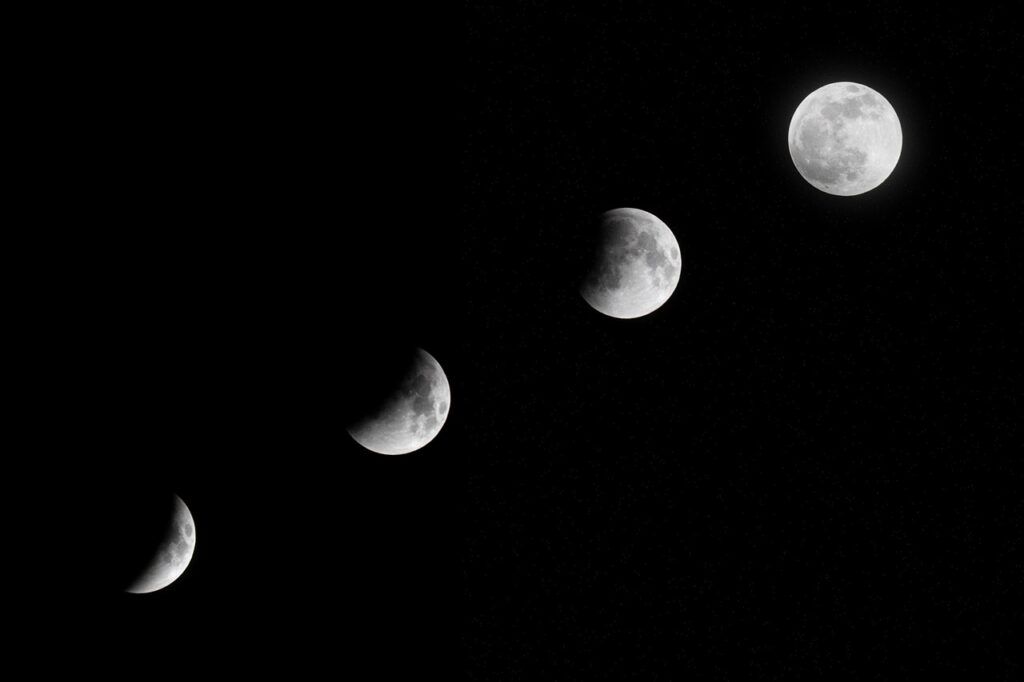
The four astronauts began their observations at 2:45 p.m. and finished just after 9:20 p.m., with the highlight coming during a lunar eclipse at 8:35 p.m. For about 40 minutes, the Orion spacecraft went out of contact as it passed behind the Moon, reaching its closest point—about 6,500 kilometres above the lunar surface.
“The sun is going behind the moon, and the corona is still visible, and it’s bright, and it covers the entire moon,” a message from the Orion spacecraft.
Haltigin said, “When the crew flies behind the moon, it’s going to be illuminated about 20 per cent or so. And so they’re going to be seeing beautiful features and shadows that we’ve never seen before. So think about the most beautiful photographs you’ve ever taken of a landscape. You never take them at noon. You always take them when there’s nice long shadows to really exaggerate some of the things that they’re able to see. And so they’ll be able to document some of these things in a way that no one has ever been before.”
The capsule will aim for a splashdown in the Pacific near San Diego on April 10, nine days after its Florida launch.
“That mission that is pushing the boundaries of exploration. And that, you know, it’s we’re part of that huge exploration, that huge endeavor right now that the human kind is taking. And Canada has a first seat on that. So I hope that everyone is extremely proud of that mission and our accomplishments that we’re making,” said Morisset.
From space: “In this really beautiful view of a crescent moon and a crescent Earth.”