Climate change, pandemics, migratory movements: our elected representatives are confronted with problems of unprecedented complexity. Unfortunately for them (and for us), research shows that they are no better able than the average citizen to make decisions about complex issues. But one researcher says there is hope and that video games can help them in their work.
Benoît Béchard has a doctorate in psychology and has been interested in political decision-making for several years. His research led him to the observation that our elected officials “do their best in circumstances that are beyond them.”
“Faced with the complexity of our world, politicians regularly make mistakes that, far from solving the problems they seek to solve, can aggravate them,” writes the researcher in his recently published book, “Bias and Politics: Why Elected Officials Don’t Decide Better Than You and Me.”
Far from being cynical, he believes that we must develop “empathy” for our decision-makers. “If we were in their shoes, probably we wouldn’t do better. Not bad either. It gives the idea that anyone can be in politics,” he said in an interview with The Canadian Press.
The associate researcher at the Co-DOT laboratory at Université Laval, who is interested in human cognition, has therefore set himself the colossal challenge of training our politicians to make better decisions. And he offers an unusual way to do this: video games.
Simulating democracy in the laboratory
He cites the example of the game “Democracy” which “can serve as a simulation microworld to reproduce political complexity in a laboratory”.
This game offers to play as a political decision-maker at the head of a country, with all the difficult choices that come with it. We have to pass laws, manage crises, collect taxes while keeping voters happy. In short, we are far from “Tetris”.
Benoît Béchard explains that politicians could come to the laboratory for a one-hour session, which would be the equivalent of a four-year term, with the objective of being re-elected while taking into account several factors.
“Considering, for example, a budget that is favourable at the end of the mandate. First of all, they have a contradictory objective: they have to please the world, but they can’t spend like crazy,” says the researcher.
The more the game session progresses, the more politicians realize that their decisions sometimes have “very negative, sometimes disastrous consequences,” he notes.
“You have to take them to the lab and expose them to training sessions repeatedly. (…) It’s like going to the gym. In many ways, the brain is a muscle,” says Benoît Béchard.
“The consequences of the consequences”
The researcher specifies that it does not aim for politicians to develop technical expertise, for example, in health or education, but rather in “complex thinking.” This means being better able to anticipate the long-term impacts of their decisions. What he calls “taking into account the consequences of the consequences”.
In his book, he points out that many biases can cloud the decision-making process of an elected official. Politicians also tend to put in place “‘striking’ measures in the short term” but which are not necessarily effective in the long term.
Benoît Béchard cites the example of the decision to send cheques directly to voters.
Humility
The researcher is aware that it will not be easy to convince politicians to come and train with him. In his book, he says that, for his research on decision-making, he needed elected officials to come to his laboratory to test their decision-making skills in front of ordinary citizens.
“Suffice to say that the majority of those contacted did not respond to our invitation,” he stresses. Fortunately for him, 20 politicians agreed to “contribute to the advancement of knowledge.” The results show that the performance of elected officials “remained remarkably low, i.e., at the very bottom of the solution space, comparable to that of the citizen sample.”
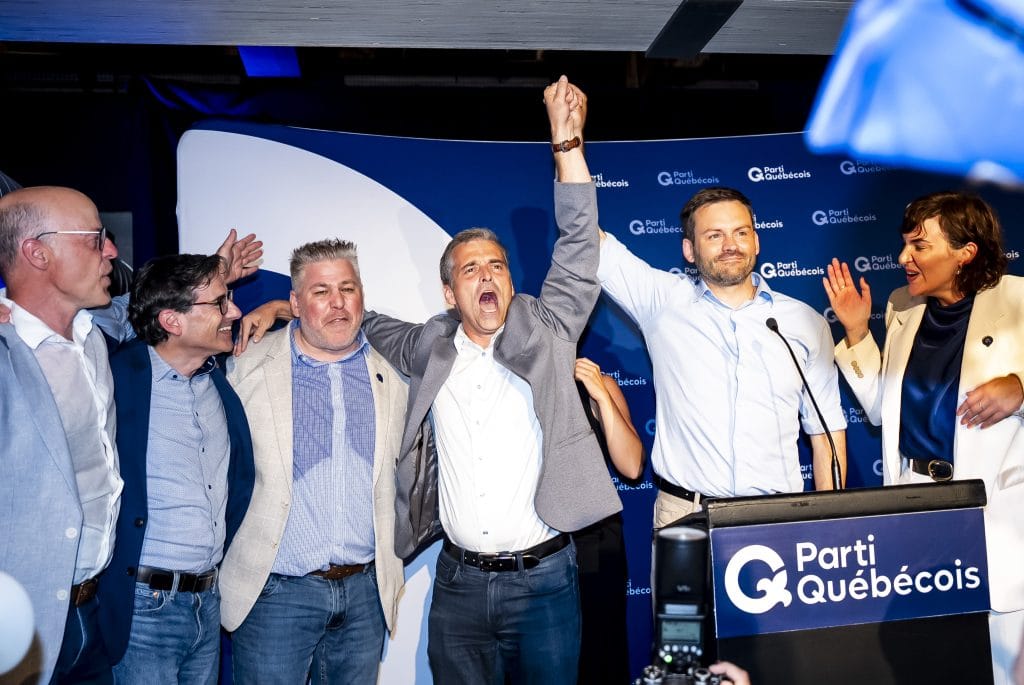
It takes a good dose of humility for an elected official whose task is to make decisions, for his constituents to accept that he may not have the capacity to do his job well. And Benoît Béchard knows something about this, because he himself has been in politics in the past. He was a ministerial advisor and candidate for the Parti Québécois in 2018.
Nevertheless, the researcher is determined and wants to collaborate with municipal organizations, such as the Fédération québécoise des municipalités and the Union des municipalités du Québec, but also the National Assembly and the House of Commons.
“At the beginning of 2026, I submitted a major request for funding to the granting agencies. My goal is to work this year on a training protocol with elected officials,” he explains.
It remains to be seen whether our politicians will agree to play the game.
–This report by La Presse Canadienne was translated by CityNews