“Do it scared.”
The three words are written across Naya Koussa’s skateboard, but for the 34-year-old Montrealer, they’re about much more than learning a new trick.
“Skateboarding is kinda scary,” Koussa said. “But it’s also about going over that fear and trying something new. I realized that this quote helped me through a lot of things in my life, personally, emotionally. I carry that sentence everywhere because once you can do something scared, then you can do everything.”
Every Thursday evening, women gather at skateparks across Montreal through Les Manon en skate, a collective welcoming women who skateboard, or simply want to learn.
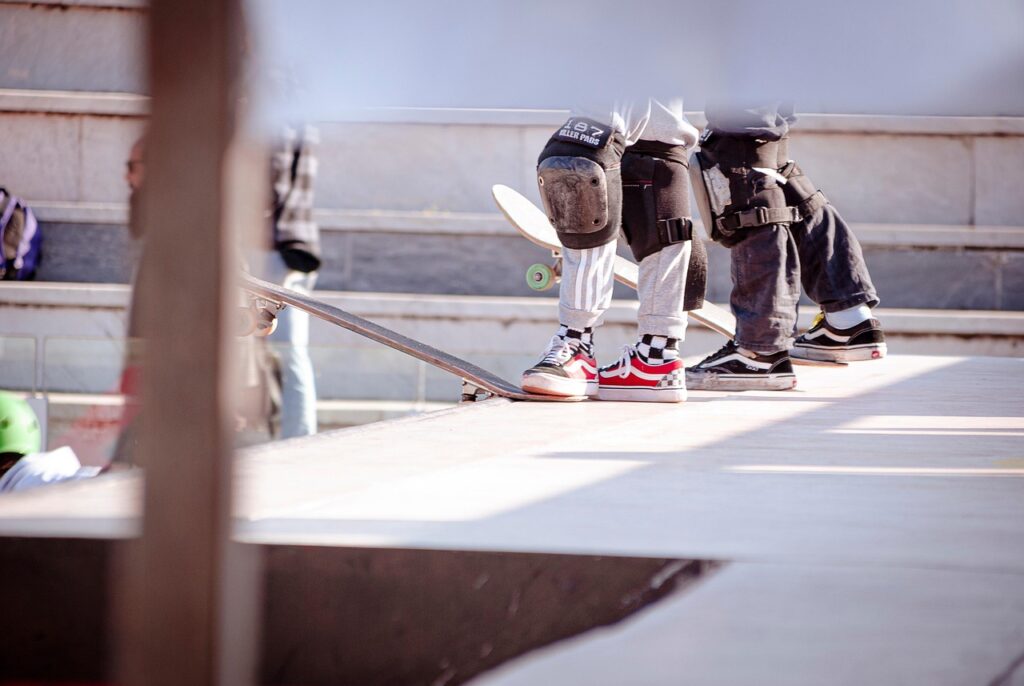
During their latest session , they gathered at Ahuntsic Park Skatepark, where members of all ages took turns rolling down ramps, cheering each other on and celebrating every small victory.
Members range from their 30s to their 60s. Many are mothers, some are grandmothers, and almost all remember what it felt like to believe they didn’t belong in a skatepark.
Instead of competition, they find encouragement. Instead of judgment, they find community. And instead of waiting until they feel fearless, they learn to show up anyway.
For Les Manon en skate member Geneviève Tremblay, the group began after two summers spent sitting on a bench watching her husband and children skateboard.
“I thought I gotta try that. I gotta give it a try. It seems like it’s fun,” she said.
Rather than teaching herself, Tremblay enrolled in one of the first adult group skateboarding lessons at Montreal’s Le TAZ indoor skatepark. It was there she met the women who would eventually create Les Manon en skate.
The group’s name came from an unexpected joke. The coaches, accustomed to teaching children, often mixed up Tremblay’s name.
“For some reason, my name is Geneviève, but they were calling me Manon all the time,” she said with a laugh.
Eventually, she stopped correcting them.
“I just gave up and I told the girls, there’s no point. I just think we’re a bunch of Manons.”
What began as a playful mistake became a badge of pride.
“We decided to own it. We decided to be Les Manons en skate, which is what we are — a bunch of middle-aged women with skateboards.”
Before discovering Les Manon en skate, Koussa says she often spent 15 minutes sitting in her car before gathering the courage to walk into a skatepark.
“As an older woman, you see kids, you see teenage boys and you’re like, ‘Is it my place here?’” she said.
Now that she is a part the group, that feeling disappeared.
“Now that I have the Manon en skate, I don’t stay in my car. I just get up and I go.”
She says having women waiting for one another changes everything.
“If you fall, there’s like a support group just over there for you. It’s just less embarrassing to have people with you.”
That support extends beyond learning how to skateboard.
“When you walk in a skate park, there’s not a lot of women or girls,” she said, looking across the ramps where boys still outnumbered girls.
“Just being there, even if we don’t do any tricks, it shows that the skate park is ours also. That’s the whole thing about the Manons — taking place in a place where we don’t expect to see women, and even less older women.”
Over the past year, that visibility has grown.
When Koussa joined, she said the group’s Instagram account had about 400 followers. It’s now approaching 1,000.
But the numbers aren’t what matter most.
“It’s not much about having followers. It’s about having girls that come to the skate park and try the skateboard for the first time. We just want more girls. It’s not about having more followers. It’s about having more girls to start skating.”
A post shared by Les Manons en skate (@les_manons_en_skate)
For 43-year-old Montrealer Pamela Fredes-Zuniga, a Les Manon en skate member, skateboarding isn’t just a new hobby; it’s a chance to rewrite a story that started in childhood.
“As a child, I wanted to try it and my mom said no because back in the days, it was a guy thing — stereotypes, cultural upbringings — and she said no.”
Decades later, she decided it was finally time.
“Now that I’m the boss of myself,” she said with a smile, “I actually tried.”
She’s only been skateboarding for four months, but says learning alongside other women has made all the difference.
“The Manon brings so much fun. It brings a sisterhood. It brings new friends. When you’re over 40, sometimes it’s harder to make new friends and to make a new community. You can come in as you are. You can be a mom or not. You can be a grandma or not. You can be good or not, and you can still feel very accepted.”
For Fredes-Zuniga, falling has become part of the lesson.
“Learning a new skill is always something important, but it’s not always the successful part that’s important, but also how you achieve it. The hard work you put into it, the failing… actually no, it’s not sometimes. It’s always very important. Failing is part of the progress that you’re making.”
She says she wanted her eight-year-old daughter to see that firsthand.
“I wanted something that I could learn… so I can actually also teach my daughter that she can fail and she can get up and try again.
“Mommy isn’t perfect. Nobody is reaching perfection, but you can just try it as hard as you can.”
Like many members, Nicole Almond spent years looking for other adults who learned to skateboard later in life before she found Les Manon en skate.
“I searched out all of the later skaters in Montreal, Quebec and surrounding area,” she said.
The group, she says, offered something she hadn’t found elsewhere.
“It’s helping women get more comfortable at the skate park and be less intimidated in typically male-dominated spaces.”
But the impact reaches beyond skateboarding.
“It makes you feel included in community. It makes you feel connected to your inner child. Feel powerful and strong. Feel like you’re going to overcome challenges. You can fall and get up again. You can just play.”
After six years on a skateboard, Almond still calls it her “new obsession.”
“I think it’s really therapeutic. It’s good for getting into your body. You make fun friends.”
For Les Manon en skate member Caroline Fabbro, joining the group changed how she felt every time she rolled into a skatepark.
“I was always a bit scared at the skate park skating alone as a woman. It’s impressive.”
A friend encouraged her to join Les Manon en skate.
Now, she says, the skatepark feels different.
“It makes me feel like I belong somewhere. I often skated on my own, and when I come and skate with them it’s so fun. I feel like I can fail if I want, I can fall and someone will pick me up from the floor and I can ride again. We encourage each other. We applaud when we do something new and we master it.”
Like several women in the group, Fabbro wishes she hadn’t waited so long.
“I wanted to do this since I was a little girl and I never did. I started only last year. I’m quite old now and I regret I didn’t do it before.”
Her advice is simple: “Do it now. If you want to do it, do it now. Because… do it scared. Just do it. Listen to your heart. Do it.”
For Tremblay, the message is one she hopes reaches women who have spent years believing skateboarding isn’t for them.
“Skateboarding is more accessible than you think.”
“I know it might seem a bit intimidating to start something new, especially skateboarding, since it’s more associated with males and teenagers. But it’s such a good sport. And when you start skateboarding, you not only do a sport, but you find a community because it’s such a good community. It’s supportive. It’s inclusive. We’re all there for each other, cheering each other and supporting each other. Even if it’s a small achievement or a big trick, we’re all going to be there to cheer for the other ones.”