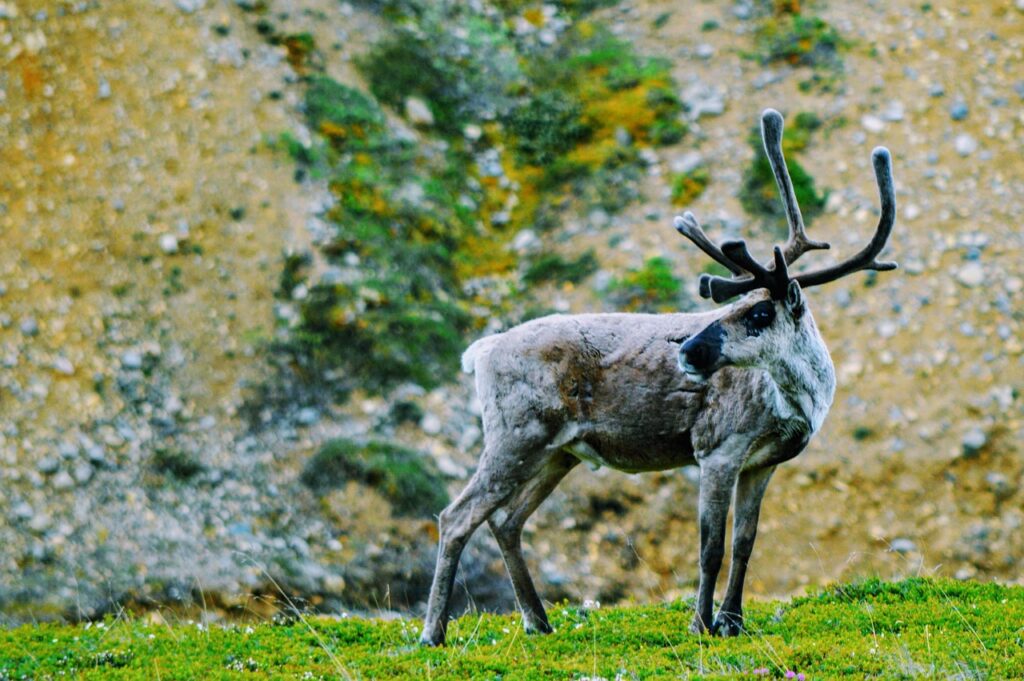
The population of caribou in captivity in Quebec has experienced growth in recent months with the birth of over a dozen new fawns, as revealed by the provincial government.
According to the Quebec environment ministry, two of the three captive herds have welcomed a total of 16 new fawns this season, increasing the overall number of caribou in captivity to 75.
Efforts to safeguard the species are being undertaken by officials from the environment ministry who oversee these captive herds. Woodland caribou in Canada are facing threats primarily due to habitat destruction caused by human activities.
The ministry stated in a press release that the health of the newborn fawns and their mothers is in good condition, with their team ready to provide additional care if needed.
Pier-Olivier Boudreault, the director of conservation at the Quebec branch of the Canadian Parks and Wilderness Society, highlighted that despite the growth in numbers, the herds remain at risk.
He expressed concern, saying, “If we encounter a year of challenges, we could be perilously close to losing the entire herd.”
In the Charlevoix herd, 11 fawns survived out of 14 births, leading to a total of 48 caribou in the herd. Five fawns were born in Gaspésie, but unfortunately, two pregnant female caribou did not survive. In a positive development, seven caribou were released from captivity to join 14 wild caribou, resulting in a captive herd of 20 in the region.
The Val-d’Or herd, the smallest with only seven caribou, did not see any growth this year.
Boudreault emphasized the challenges of relying on captive herds for species protection, indicating that the slow growth shows the complexities involved.
While the herds have been in captivity since 2020 for Val-d’Or, 2022 for Charlevoix, and 2023 for Gaspésie, Boudreault stressed the temporary nature of this protection measure.
He suggested that restoring the natural habitat of the caribou is essential for their long-term survival, underscoring the need to reintegrate them into their ecosystems.
Caribou, known as an “umbrella species,” play a crucial role in old forest habitats, making their well-being closely linked to that of their environment. Boudreault emphasized the necessity of forest conservation measures and collaboration with the forestry industry to strike a balance between caribou protection and economic interests.
The $25-million agreement between Quebec and Ottawa announced in late June to support caribou conservation efforts garnered mixed reactions from environmentalists. While acknowledging the intergovernmental cooperation, concerns were raised about the tangible impact of the funding.
In addition, the federal government announced $15 million to support Indigenous communities in Quebec implementing their conservation programs.